

The Warning Signs Families Should Never Ignore When Meth Use Escalates
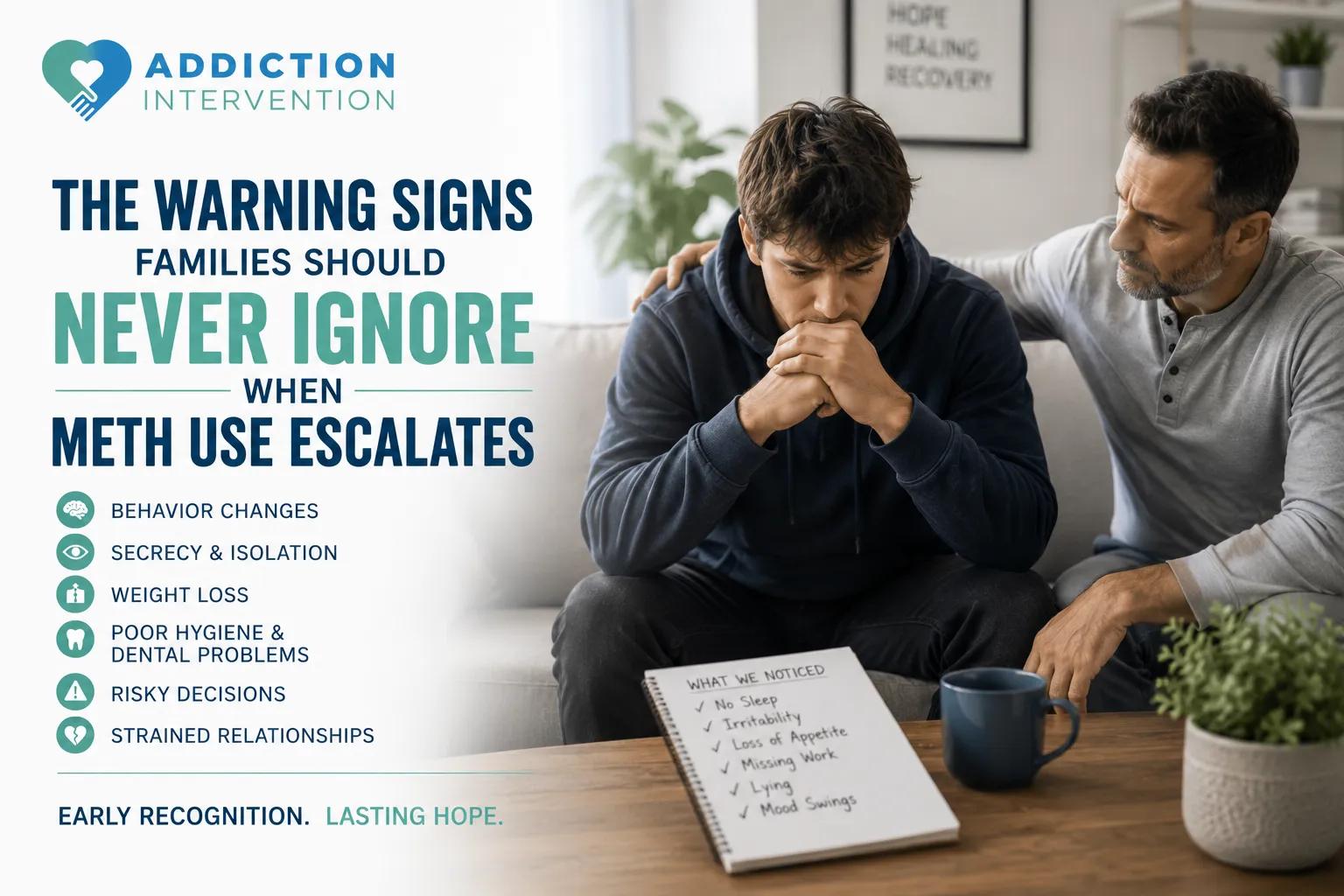
conversation and early recovery support
Introduction
Methamphetamine addiction can develop quickly and affect nearly every aspect of a person's life. While some changes are easy to recognize, others happen gradually, making it difficult for families to know when occasional concerns have become a serious problem. Many loved ones hope the situation will improve on its own, only to realize later that the addiction has continued to escalate.
Unlike some substance use disorders that progress over several years, meth addiction can rapidly change a person's behavior, decision-making, physical health, and relationships. The earlier families recognize these changes, the greater the opportunity to encourage treatment before long-term consequences become even more severe.
Recognizing the warning signs is not about making assumptions or placing blame. It is about understanding when professional support may be needed and taking action before a crisis occurs.
Why Early Action Makes a Difference
Meth addiction rarely improves without professional help. As dependence grows, individuals often begin using the drug more frequently while becoming less aware of the damage it is causing. Waiting for an overdose, arrest, or major health emergency often limits treatment options and increases the challenges of recovery.
A professional meth intervention can help families address concerns in a structured and supportive way. Instead of reacting during a crisis, early intervention creates an opportunity for honest conversations that encourage treatment before addiction continues to progress.
Families who act early often have more resources available and may avoid many of the emotional, financial, and medical consequences associated with long-term meth use.
Behavioral Changes Families Should Watch For
One of the earliest indicators of meth addiction is a noticeable change in behavior. These changes are often gradual, making them easy to dismiss as stress, work pressure, or temporary emotional struggles.
Some of the most common behavioral warning signs include:
Staying awake for long periods with little or no sleep.
Increased secrecy about daily activities.
Withdrawing from family and friends.
Mood swings and irritability.
Neglecting work, school, or household responsibilities.
Although these behaviors do not automatically indicate meth use, several occurring together should encourage families to seek professional guidance.
Physical Warning Signs That Should Not Be Ignored
Methamphetamine places significant stress on the body. As use continues, physical symptoms often become easier to recognize.
Families may notice:
Rapid and unexplained weight loss.
Poor personal hygiene.
Skin sores or excessive scratching.
Dental problems that develop quickly.
Constant restlessness or repetitive movements.
Dilated pupils.
Shaking or tremors.
A tired appearance despite periods of unusual energy.
These physical changes often suggest that addiction has progressed beyond casual or experimental use. Seeking professional advice at this stage may help prevent further medical complications.
How Meth Addiction Affects the Entire Family
Meth addiction affects the entire family, not just the individual using the drug. Parents, spouses, siblings, and children often experience constant worry, emotional stress, and uncertainty as they watch their loved one struggle. These challenges can strain relationships and make it difficult for families to know how to respond, highlighting the importance of seeking professional guidance early.
Why Families Often Wait Too Long
Many families recognize that something is wrong long before they decide to take action. Unfortunately, fear and uncertainty often lead them to delay difficult conversations. Some worry they will damage their relationship with their loved one, while others hope the situation will improve naturally without professional treatment.
It is also common for families to question whether the addiction is truly serious enough to require intervention. They may compare their loved one's behavior to others or believe they need more evidence before acting. During this period of hesitation, meth addiction often continues to progress, increasing both the physical and emotional risks.
The longer treatment is delayed, the more likely the individual is to experience worsening health, financial instability, legal problems, damaged relationships, and emotional distress. Taking action early creates more opportunities for successful recovery and reduces the likelihood of long-term consequences.
Treatment Often Begins With Stabilization
One of the biggest concerns individuals and families have about recovery is withdrawal. Fear of withdrawal symptoms prevents many people from seeking help, even when they recognize that addiction has taken control of their lives.
Depending on the person's physical condition and history of substance use, a medical detox program may be recommended before beginning ongoing treatment. Medical supervision helps manage withdrawal symptoms safely while allowing healthcare professionals to monitor the individual's overall health throughout the detoxification process.
Detox is not a complete addiction treatment program, but it provides an important foundation for recovery. Once withdrawal has been safely managed, individuals are better prepared to participate in counseling, behavioral therapy, and long-term treatment designed to address the underlying causes of addiction.
Understanding how detox works often helps reduce fear and gives families greater confidence when discussing treatment options with their loved one.
Preparing for the Conversation
Starting a conversation about meth addiction is rarely easy. Strong emotions, denial, and fear can quickly turn a discussion into an argument if families are not prepared.
Before speaking with a loved one, it is helpful to:
Choose a time when everyone is calm.
Speak privately in a safe environment.
Focus on specific behaviors instead of making accusations.
Express concern using supportive language.
Listen without interrupting.
Be prepared to discuss professional treatment options if the individual is willing to accept help.
Families should also understand that one conversation may not immediately change someone's decision. Recovery often begins through multiple respectful discussions that gradually help the individual recognize the need for treatment.
Supporting Recovery Without Enabling Addiction
Supporting someone through addiction does not mean protecting them from every consequence of their actions. In fact, continually covering up problems, providing financial assistance without boundaries, or making excuses for destructive behavior may unintentionally allow addiction to continue.
Healthy support focuses on encouraging accountability while maintaining compassion.
Families can help by:
Establishing clear and consistent boundaries.
Encouraging professional treatment.
Avoiding arguments during periods of intoxication.
Celebrating progress throughout recovery.
Taking care of their own emotional well-being.
These approaches help create an environment where recovery becomes possible without reinforcing harmful behaviors.
Recovery Is Built Through Ongoing Support
Recovery continues long after treatment begins. Lasting success often depends on ongoing professional care, healthy routines, and consistent family support. Although setbacks can happen, they do not mean recovery has failed. Continued encouragement and participation in treatment help individuals build a stronger foundation for long-term recovery.
Hope Exists Even When Addiction Has Progressed
Even when meth addiction has been present for months or years, recovery remains possible. Many individuals successfully rebuild their lives after receiving appropriate medical care, structured treatment, and consistent family support.
If concerns about withdrawal have delayed seeking help, learning more about when detox feels terrifying for families can help answer common questions about the recovery process and explain why professional medical support often makes the first stage of treatment safer and more manageable.
Understanding what to expect helps replace fear with confidence and allows families to focus on taking positive steps toward recovery rather than waiting for another crisis to occur.
Conclusion
Meth addiction can progress quickly, making early recognition one of the most important factors in helping someone begin recovery. While it is natural for families to hope that the situation will improve on its own, delaying action often allows addiction to become more deeply rooted and increases the risk of serious physical, emotional, and financial consequences.
Recognizing changes in behavior, physical health, and daily responsibilities gives families an opportunity to respond before a crisis occurs. Seeking professional guidance, understanding available treatment options, and approaching conversations with compassion can make a meaningful difference in encouraging a loved one to accept help.
At Addiction Intervention, we understand how overwhelming these situations can feel for families. With the right support, informed decisions, and timely action, recovery is possible. No family has to wait until addiction reaches its worst point before taking the first step toward lasting change.
Frequently Asked Questions
What are the first signs that meth use is becoming a serious addiction?
Early warning signs often include staying awake for long periods, sudden mood swings, unexplained weight loss, increased secrecy, declining work or school performance, financial problems, and withdrawing from family or friends. When several of these signs appear together, professional guidance should be considered.
What is a meth intervention?
A meth intervention is a structured process that helps families encourage a loved one to recognize the impact of addiction and accept professional treatment. It is designed to create a supportive conversation while reducing conflict and increasing the likelihood that the individual will seek help.
Is medical detox necessary before meth addiction treatment?
Not everyone requires detox, but many individuals benefit from a medical detox program before beginning rehabilitation. Medical supervision helps manage withdrawal symptoms safely and prepares the individual for ongoing treatment through counseling and behavioral therapies.
Why do families often wait before seeking professional help?
Families commonly delay because they hope the addiction will improve on its own, fear damaging their relationship with their loved one, or are unsure whether the problem is severe enough to require intervention. Unfortunately, waiting often allows addiction to worsen and reduces opportunities for early treatment.
Can someone recover after years of meth addiction?
Yes. Many people successfully recover even after long-term meth use. Recovery depends on receiving appropriate medical care, participating in evidence-based treatment, and maintaining ongoing support from family members and healthcare professionals.
How can families support recovery without enabling addiction?
Families can provide meaningful support by encouraging professional treatment, maintaining healthy boundaries, avoiding behaviors that unintentionally support continued substance use, communicating with empathy, and learning more about the recovery process. Supporting recovery also means taking care of their own emotional well-being throughout the journey.